
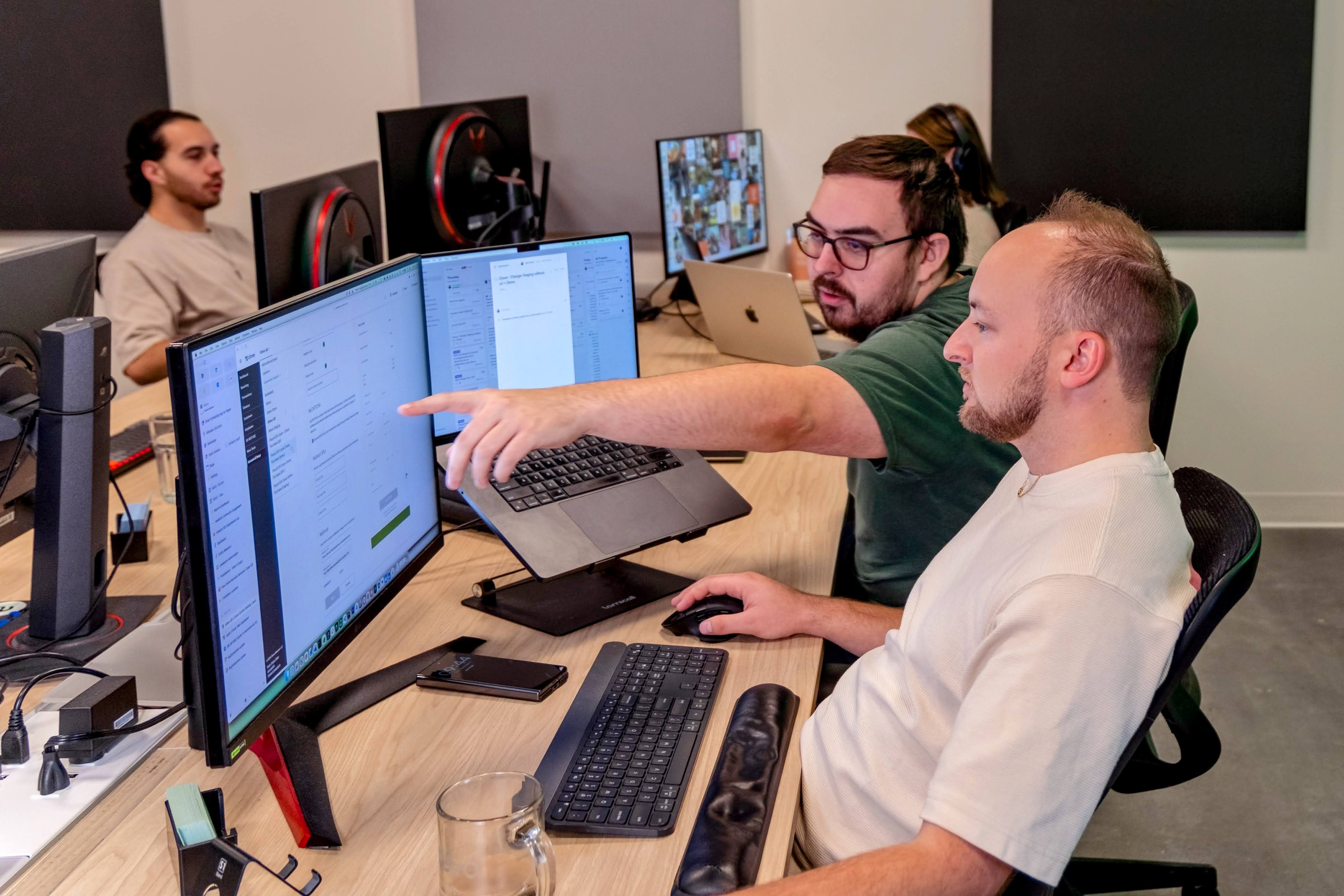
At Altevo, we support businesses with a structured yet flexible approach. We are involved from the very beginning and remain present well after launch. Every project is unique, but our approach is built on a solid methodology.
Here is what a development project looks like in practice at Altevo.
We start by understanding the real need
Often, a client comes to us with an idea for a solution: a client portal, an internal application, a management tool. But through discussion, we often discover that the real need is deeper or different altogether.
We explore existing processes, pain points, time losses, and strategic objectives. Our goal is to ask the right questions to uncover the real technological, operational, or human challenges.
According to Alexandre Houle, software developer at Altevo:
We do not want to deliver a cool but useless tool. We want to solve a real problem, with a concrete impact.
Here is how we structure this diagnostic phase:
- Clarifying the need We reframe the request using concrete, real-life examples.
- Mapping current processes We identify key work steps, tools in use, and friction points.
- Identifying opportunities Automation, integration, simplification: we propose improvement avenues.
- Projection Together, we envision how the software will integrate into the client’s real-world operations.
Then, we structure the project
Once the challenges are clearly identified, we turn them into a clear development plan. This allows us to move forward methodically, without surprises or ambiguity.
At this stage, we:
- Define key features as user stories
- Estimate development effort for each functional block
- Assess required resources (time, budget, expertise)
- Create a roadmap with intermediate deliverables
The client has visibility from the start. We define together what will be delivered and in what order. We stay on course while remaining flexible.
We move on to design
Before writing a single line of code, we design the product. This step is often underestimated, yet it saves a tremendous amount of time later.
We create mockups, clickable prototypes, and user journeys. The client can visualize their future tool and understand how employees or customers will interact with it.
This is also when we make the right technical decisions: which technologies to use, which constraints to respect, and what data will be handled.
Development happens in short cycles
We work in iterations, or sprints. Every two to three weeks, the client receives a functional version of part of the product. They can test it, provide feedback, and adjust priorities.
This way of working allows us to:
- Involve the client throughout the project
- Avoid unpleasant surprises at the end
- Increase relevance with every cycle
The client does not wait three months to see something. They test early, and we adjust accordingly.
Every sprint delivers, tests, and improves
Testing is built in from day one. We test internally first (functional, performance, and security tests), then with the client. Every piece of feedback is considered, integrated into the next iteration or planned for later. We work with transparency and trust.
At each stage, we deliver:
- A functional version of the product or a key module
- A test environment accessible to the client
- Progress tracking and a space for feedback
- Continuous adjustments based on business priorities
Then, we plan production deployment
When the product is ready, we plan its production launch. This is a strategic step. We avoid risky or rushed deployments. We prepare a pre-production environment identical to production. The client can test the final product, simulate real use cases, and train their teams.
Once validated, deployment is carried out in a controlled manner. The technical team remains available to ensure stability and resolve any issues.
After delivery, we remain involved to:
- Ensure corrective and preventive maintenance
- Make minor adjustments or continuous improvements
- Train new users or administrators
- Discuss and plan future evolutions
Software is never truly finished. It needs to evolve with the business. And we are here for that.
Why this process is well suited to SMEs
Because it is both structured and flexible. It allows companies to:
- Manage budgets progressively
- Reprioritize if the context changes
- Involve the people who actually use the tool
- Deliver tangible value within the first few weeks
Many SMEs have had bad experiences in the past, either with approaches that were too rigid or too improvised. Our method strikes a balance between discipline and adaptability.
In summary: a clear, human, and controlled process
At Altevo, we do not just sell development. We build durable tools aligned with our clients’ realities.
Our method delivers quickly without sacrificing quality. It creates real collaboration between our teams and our clients’ teams. Most importantly, it ensures that the software built will actually be used, appreciated, and useful.